The Love Language of AI
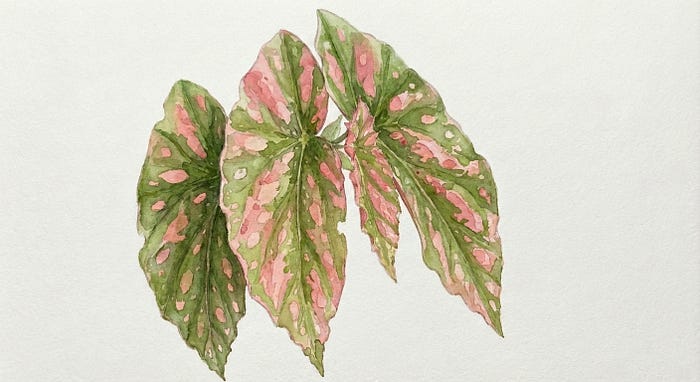
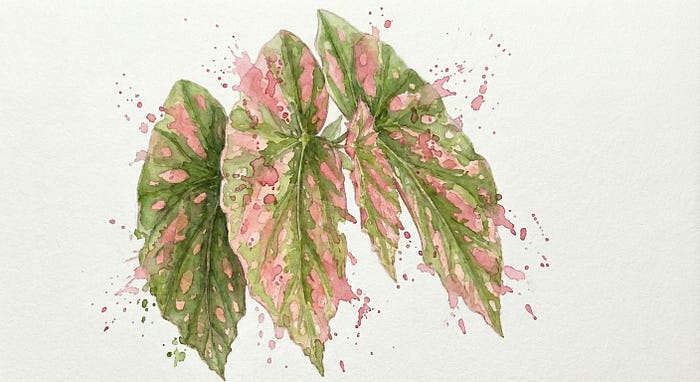
A while ago, I decided to learn botanical art with ChatGPT.
Not “draw a pretty plant” botanical art. I mean the kind where form, imperfection, and symbolism matter. Where a leaf isn’t just a leaf, but a record of growth, damage, care, and time. I wanted to use plants to express ideas I already had in my head, just not in visual form yet.
At first, it went… badly.
I’d type something vague like:
“Create a botanical illustration of a pink variegated plant.”
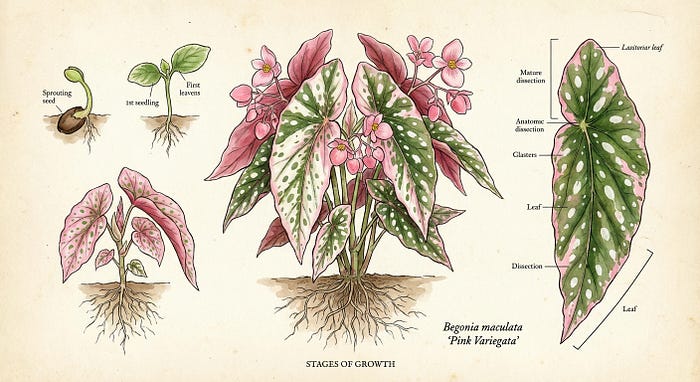
And ChatGPT would give me something that looked fine at first glance. Clean. Decorative. Totally soulless. The kind of image you’d expect on generic wallpaper or a wellness app splash screen.
My first instinct was to think: The AI doesn’t understand my taste.
Turns out, I wasn’t speaking its language.
Love languages, but for machines
If you’ve read The 5 Love Languages by Gary Chapman, you know the idea: people express and receive love in different ways.
Words of affirmation.
Quality time.
Acts of service.
Gifts.
Physical touch.
Most relationship problems aren’t about lack of care. They’re about mismatched communication.
AI is no different. It doesn’t respond to intention. It responds to structure.
Once I stopped treating prompts like wishes and started treating them like communication contracts, everything changed.
My first real breakthrough with botanical art
Here’s the kind of prompt I started with:
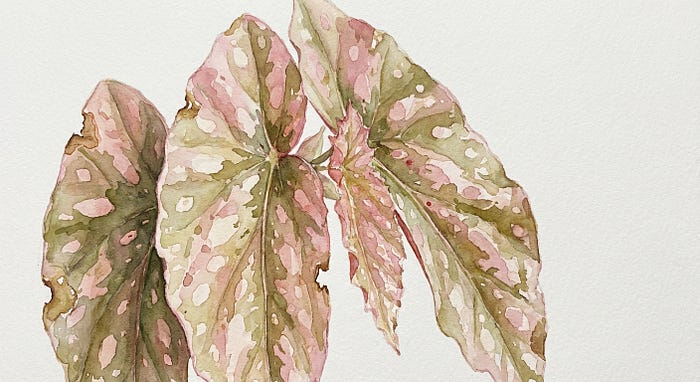
Create a botanical illustration of a pink variegated begonia maculate representing growth.
Here’s what finally started to work:
Act as a contemporary botanical illustrator, blending scientific observation with expressive composition.
Subject: a pink variegated begonia maculata, imperfect and asymmetrical.
Focus: variegation patterns that feel irregular and organic, not decorative.
Style constraints: water-color painted look, visible brush texture, soft pink and muted green tones, soft diffused natural light
Composition: cropped close, leaves overlapping, no background elements competing for attention.
Mood: quiet, calm, elegant, observational rather than ornamental.
Avoid: symmetrical layouts, hyper-polished realism, or trendy pastel aesthetics.

That’s when it clicked.
ChatGPT wasn’t failing at art. It was waiting for me to explain how I see. It wasn’t creating for me. It was translating my thinking into visuals, once I learned how to speak clearly.
This felt familiar… because I’m a software engineer
That moment felt oddly familiar.
Because this is exactly how I already work with AI when I write code.
Bad prompt:
“Write a function to handle user authentication.”
Better prompt:
Act as a senior backend engineer working in a .NET environment.
Write a C# authentication service using JWT.
Constraints: ASP.NET Core, no external identity providers, access token expires in 15 minutes, refresh token flow required.
Focus on clarity, security best practices, and testability.
Output: clean, readable code with comments explaining key design decisions.
Avoid overengineering and unnecessary abstractions.
Same AI. Radically different outcome.
The pattern is the same whether the output is code or a pink variegated leaf.
AI’s primary love language: structured clarity
If AI had a dominant love language, it wouldn’t be words of affirmation.
It would be clear, structured instruction.
AI loves:
- Explicit roles
- Clear constraints
- Defined scope
- Examples
- Boundaries
AI struggles with:
- Vibes
- Implicit expectations
- “You know what I mean”
- Emotional shorthand
A lot of frustration with AI comes from treating it like a mind reader instead of a system.
The five love languages of AI (my unofficial version)
Borrowing Chapman’s framework, this is how I now think about working with AI.
1. Words of affirmation → Explicit roles
Tell it who it’s supposed to be.
Act as a senior product designer.
Act as a botanical illustrator, not a decorator.
Act as a critical reviewer, not a yes-machine.
Roles shape judgment.
2. Quality time → Iteration
The best results don’t come from one perfect prompt.
They come from back-and-forth.
Increase the contrast 10%
Push the texture 20% more.
Remove brown parts of the leave
Iteration isn’t inefficiency. It’s collaboration.
3. Acts of service → Clear tasks
One request at a time.
First explore.
Then refine.
Then execute.
AI works best when the task is focused.
4. Gifts → Examples
Examples are cheat codes.
Here’s an image I like.
Here’s one I don’t.
Match this composition, not this color palette.
You’re not limiting creativity. You’re guiding it.
5. Physical touch → Boundaries
Odd metaphor, but it holds.
Constraints are how you shape the output.
What to avoid.
What not to emphasize.
What matters more than everything else.
Clear limits produce better results than vague freedom.
AI doesn’t read between the lines
This was the hardest lesson for me to internalize. Humans are great at inference. We fill gaps, read tone, and rely on shared context without even noticing. AI doesn’t do that. If you don’t say it, it doesn’t exist. If you imply it, it may ignore it. If you contradict yourself, it will average your intent and give you something safely bland.
Once I accepted this, I stopped being disappointed and started being precise. The quality of my outputs improved almost immediately, not because the AI changed, but because I did.
From magic to medium
I don’t treat AI like magic anymore. I treat it like a medium, a fast collaborator, and a mirror that reflects how clearly I think. Learning to “speak AI” didn’t make my work less human, it made my thinking sharper and more deliberate.
Whether I’m shaping a pink variegated leaf, a system architecture, a prompt, or an agent definition that runs without me watching, the rule stays the same:
If you want AI to understand you, you have to understand what you’re asking for first.
Turns out, that’s a pretty good love lesson too.